

Doing nothing feels safe.
If your money is sitting in your current account, nothing bad is happening to it. You can see it, access it instantly, and there’s no risk of markets going up or down. No decisions to regret. No graphs to check.
But quietly, in the background, something is happening.
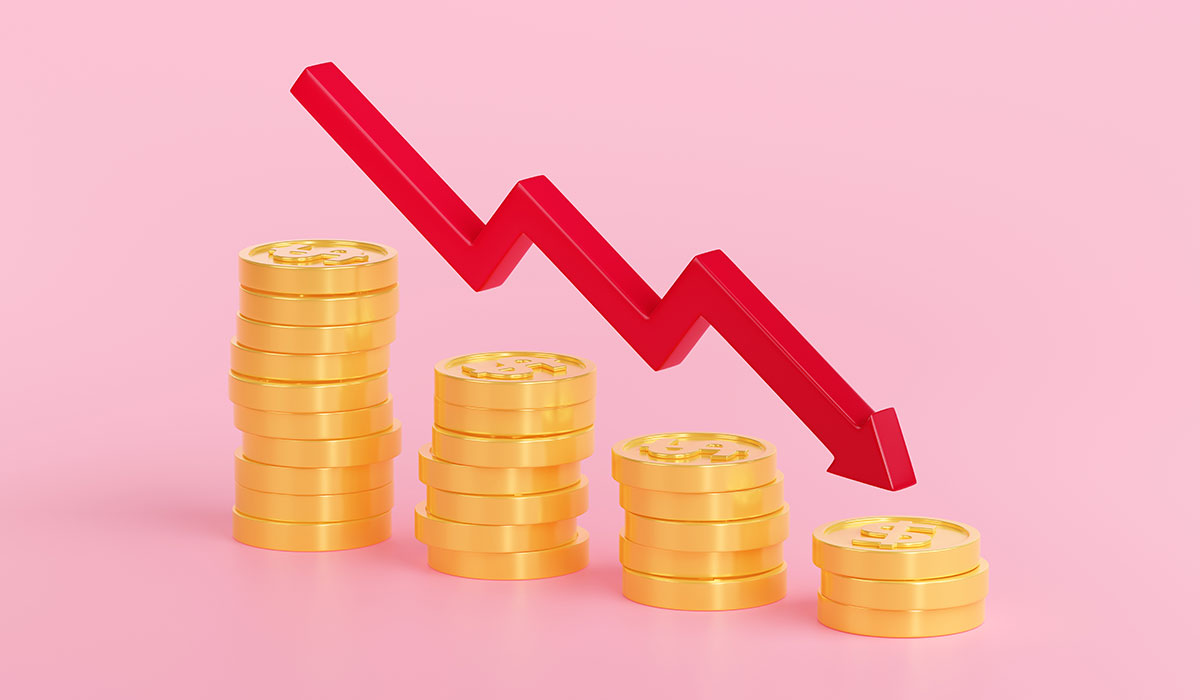
Your money is shrinking.
Inflation is the silent thief
Inflation is simply the cost of living going up over time. Food, energy, rent, holidays – they all tend to get more expensive year after year.
When prices rise and your money stays still, your spending power goes down.
If inflation is running at 4% and your money is earning 0%, then every year your cash buys roughly 4% less than it did before. You haven’t spent anything. You haven’t made a mistake. But you are still worse off.
That’s the hidden cost of doing nothing.
Why cash feels safer than it is
Keeping money in cash feels responsible. It feels cautious. For short-term needs, it is the right thing to do.
But problems arise when money sits untouched for years without a purpose.
A lot of people end up with large sums in current accounts simply because they never got round to deciding what to do with it. The intention was always to “sort it later”.
Later quietly turns into years.
Meanwhile, inflation does its work.
Doing nothing is still a decision
It doesn’t always feel like it, but choosing not to act is a financial decision.
-
Not switching to a savings account is a choice
-
Not using an ISA allowance is a choice
-
Not investing long-term money is a choice
They’re understandable choices, often driven by uncertainty or fear of getting it wrong. But they still come with consequences.
The cost just isn’t shown on a statement.
The real-world impact over time
Let’s keep it simple.
£10,000 sitting in a non-interest-bearing account for 10 years during moderate inflation could lose thousands in real spending power.
You’ll still see £10,000 on the screen.
But it won’t feel like £10,000 anymore.
This is why people sometimes say they earn more than ever, yet feel poorer. Money hasn’t disappeared, it’s just quietly weakened.
This isn’t about chasing big returns
This isn’t a call to throw money into risky investments or try to beat the market.
In fact, some of the smartest moves are deliberately boring:
-
Moving spare cash into a decent savings account
-
Using tax-free wrappers like ISAs
-
Separating short-term money from long-term money
-
Letting time do the heavy lifting
You don’t need to “maximise” everything. You just need your money to work a little, instead of not at all.
Matching money to its job
One of the biggest mindset shifts is giving every pot of money a role.
-
Day-to-day spending → instant access, zero stress
-
Emergency fund → safe, easy access, some interest
-
Long-term goals → time to grow, ups and downs accepted
Problems start when all three live in the same place doing the same thing.
Money without a job tends to sit still. And money that sits still slowly falls behind.
Progress beats perfection
You don’t need a perfect plan.
You don’t need to understand every product or read financial news every day. You don’t even need to act on everything at once.
One small step, opening a savings account, setting aside a modest amount, learning one new concept, already puts you ahead of doing nothing.
The biggest financial risk for most people isn’t making the wrong move.
It’s staying frozen.
The bottom line
Doing nothing with your money feels harmless, but over time it carries a real cost.
Inflation doesn’t announce itself.
It doesn’t send warnings.
It just quietly reduces what your money can do for you.
The good news? You don’t need to be clever, brave, or aggressive to fight back.
You just need to start.
Even boring steps count.